Social Icons

Pages

Friday, 15 May 2015

4 Criteria of Personal Core Competencies

Have you ever wonder how a person get paid so much for their career while you believe the job is not extraordinary? Well, I do sometimes. 

Recently I learned an corporate internal environment analysis in my master and came across the core competency criteria. It was nothing particularly new or unique, but at a closer look, I tried to apply to myself as a person. 

It WORKS! Let's see how...

What is Core Competency?

Following the concept by Coyne, Hall, and Clifford proposed that the core competency is "aggregates of capabilities, where synergy is created that has sustainable value and broad applicability.

The 4 Criteria

A core competency must be:
  • Valuable
    • The set of capabilities should help the person in the process of finding opportunities and create value, or preventing threats from surrounding.
  • Rare
    • The capabilities are possessed by few people, or none.
  • Costly to Imitate
    • The capabilities should not be easily copied due to 3 main factors:
      1. Experience- Rich or extraordinary personal experience
      2. Causal ambiguity
        - Unique ways of doing things that no one can understand
      3. Social complexity
        - Network and relationship of the person
  • Non-substitutable
    • The capabilities that is invisible to others; thus, make it difficult to substitute.
Core competencies are the reason behind the differences between individuals which create competitive advantage that makes others perceived you are an important person that cannot be substituted.

I hope after reading this article you can find your capabilities and create your own core competencies.
"Shaping the Future of Business"


Keep in touch:
Twitter - @Rathapat_S


Friday, 2 January 2015

[Part 1] Micro-Econonprofit 101

[Continued: Issues OR Opportunities?]

Merry Christmas! I hope everyone has had a great time with love ones and safe journey. Once again, lots of great things were done over Christmas this year.

Previous post I touched on three major focuses I've found when I was volunteering, working, and studying about nonprofit organizations in BC, particularly Lower Mainland BC. In this post, I would like to expand on the first focus, "Lack of Financial Supports".

There are several ways a nonprofit organization can obtain financial income: donations, sponsors, grants, product or service fees, etc. Many organizations I am aware of, spend lots of time on seeking donations, sponsors, and grant writings; but not many seek to improve its services or products and focus on sustainable income from its own operation. It is true that many organizations are serving to the target with limited income; thus, charging the clients for sustainability would not be feasible, but that does not mean the organization cannot have additional services to generate funds, or even a social enterprise.

The question is probably how to create such thing as social enterprise or provide services that high income population can enjoy because of the perception toward nonprofit organizations' services (eg. private fitness facility versus YMCA).

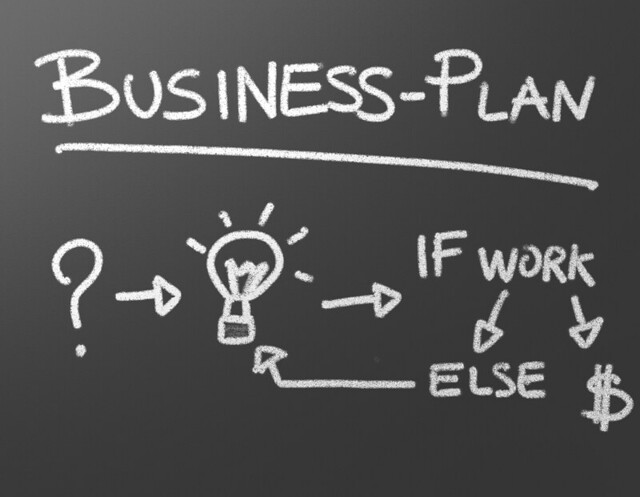
As many nonprofit organizations will hate me for this, but it is true that we need to operate as if we are a business. This does not mean that we need to pursue maximization of shareholder's wealth. It means, we need to have a organizational (business) plan for both short and long term (click here if you are not sure what is business plan looks like).

Do we really need a organizational plan for a not-for-profit organization? I say yes, because business plan organizes all aspects within an organization and the detailed organizational plan would create a clear single path for staff to follow. Which will likely lead the organizations to the successful result.

Lastly, having products and services that allow organizational sustainability will generate constant cash flow rather than relying on single-time donation. Several organizations is now pursuing sustainability plan by using monthly sign-up which in my opinion, is not sustainable (even though the results proved otherwise).

Next I will discuss about the second topic, "Lack of skilled labors". Generally, it is one of the important reasons preventing nonprofit organizations to grow. Find out in my next post.


"Shaping the Future of Business"

Keep in touch:
Twitter - @Rathapat_S

Saturday, 20 December 2014

Issues OR Opportunities? [The Introduction]

It sounds bad as it is but we need to face the truth that nonprofit sector is becoming competitive. I had conversations with a few of local nonprofit organizations, all of them were seeing other nonprofit organizations that are offering the same services/products, locating in the same area, targeting the same people, having the same value(s), as partners. My question was "How is the idea treating your organization?"

The results I found in those nonprofit organizations can be categorized into three main focuses, (i) lack of financial supports, (ii) lack of skilled labors, and (iii) lack of public awareness. I will briefly describe each of the issue in this posting.

As an MBA student and marketing apprentice, seeing the competitors as partners will not only limit the organization to differentiate itself from competitors due to lack of competitiveness, but also discourage the clients and donors to support the organization because they cannot distinguish the organization with the rest; hence, they tend to support those organizations they are familiar with or had been using the services or products.

Second issue is most likely to limit only to some nonprofit organizations, lack of skilled labors. My experience volunteering and working for nonprofit organizations, this seems to be one of the most important issue because without skilled labors, the organizations grow slowly, if lucky. In fact, not many nonprofit organizations see the importance of or cannot afford a professional marketing personnel or agency. Some perceive marketing activities as unnecessary expenses. Again, how is that idea treating your nonprofit organization?

Most nonprofit organizations I've been with did not have any issue regarding number of clients because they serve to the local communities where they are located and to a small portion of the communities. But that does not imply that the organizations have solid public awareness because the amount of donations received in the community is relatively small considering size and income of the people living in the area.

I will leave it here for this post as I am planning to write several chapters on these concerns. Although I mentioned these as issues or problems, I do not mean that they cannot be seen as opportunities. I will expand on those in the following postings.

Credit: Striatic


"Shaping The Future of Business"

Follow up with this topic on next Saturday 27th November, 2014

Follow me on:
Twitter: @Rathapat_S
LinkedIn: ca.linkedin.com/in/rsuwanaratana/

Friday, 12 December 2014

"Goal of Life"

After half a year pause on this blog due to personal duties, I finally come back to write about nonprofit matters again.

Right now I'm studying master degree in business administration, I notice one common thing in my peers. They all want to work for $$$, and very small portion of peers really know why they are doing it, or how would it improve their society and communities. Only one thing they concern is "good pay".

I spent my time talked to many of my peers, I found out that they find a hard time finding what they like or want to do in the future; hence, "with money I can do anything I like" (quoted from a peer). It does make sense but would you live another 60 years having all the money you want, but still not satisfied because you have no GOAL in life?

Now, the question is, how to get to know your goal of life? This is probably one of the hardest question new generation is facing. Here is how I find myself in non-profit industry and communications.

First, ask oneself if there is one thing I want to improve about the world, what would it be? If you can answer that, you probably have the topic. Second, how can I be a part of change or improvement? Always remember to disregard the impossible and come up with the most viable method(s). Third, Am I on the path toward the change? Fourth, how much resources do I have? This includes your time (assuming you are 20 years old, then you have approximately 50 years of workable time), money, knowledge, etc. Lastly, What am I seeing after my time is done? This is simply your vision of your goal.

To wrap-up how to realize my life's goal:

  1. What do I want to improve in this world?
  2. How can I be a part of change/improvement?
  3. Am I on the right direction toward the goal?
  4. How much resources do I have?
  5. What do I see after my time is done?
Hope this can be useful for everyone who is trying to find oneself.


"Shaping the Future of Business"
- Rathapat (Moe) Suwanaratana

Twitter: @Rathapat_S

Monday, 24 March 2014

The Art Of Marketing, Vancouver

This is No Science


Recently I had a chance to attend one of the best marketing conferences in my life, "The Art of Marketing." I learnt numerous lessons from the six awesome speakers: Seth Godin, Nancy Duarte, Mitch Joel, John Jantsch, Brian Wong, and Keith Ferrazzi. And today I would love to share the lessons with you!

A quick summery of the summery...

The event was set in The Centre downtown Vancouver. The contents from the speakers were various from abstract to application. In general, they revolved around the networking, creativity, old VS new marketing, digital marketing, relationship, etc. That's not all! There was an illusionist performed a "dangerous card trick"! Overall, this event is not only educating, but also entertaining, a true "Edutainment event"!

Summary of the Event

Although I will share the experience and knowledge I learnt from the event, however, I will not provide information or photo of the speakers.

The first speaker, Seth Godin, gave one of the most memorable presentation I have ever been. He explained about different ways we can look at the world. The revolution of marketing in contemporary world, the "mass" population is decreasing, and the "weird" (as Godin called them) is increasing. Hence, marketers need to focus on the "weird" people, not the mass. 

He further described his perspective on marketing as "making the one and only" It is not effective to create something using the existing; instead, create something that is not exist. An example was gave by Godin about the first fax machine. The key to success is to provide something that is not exist and benefit everyone.

It is all about taking risk. "If failure is not an option, then neither is success" said Godin. That is why marketing is like arts, because we need to keep trying until we get it right. We need to jump off the cliff and let the wings grow on the way down. The right time will never come, waiting will paralyze us from moving forward. 
Communications process today by Nancy Duarte

Second, the communications expert, Nancy Duarte, elaborated methods to create a successful story. Apart from the dramatic story structure (begin, middle, and end), she introduced "what is" and "what could be". Many successful speakers (Steve Job and Martin Luther King Jr.) used this strategy to give their speech.

Always remember who you are talking to, the audience. It is most convincing if you know your audience and craft the speech accordingly. If it is a presentation, utilize visuals to support your story. Visual is meant to complement your speech, not distracting the audience attention.

Additionally, digital marketing is BOOMING! Marketers are freaking out about all these technologies whether social media, mobile, or smart devices. Mitch Joel pointed out some of the funniest, memorable, and knowledgable topics: Direct relationship, Sex with Data, Create utilization values, and Once screen world.

To sum up Joel speech, we should focus on the relationship part rather than spending most of the time trying to be on the top of the technology chain. Although all those are important but down to the end of the road, only the screen that is in front of a consumer that matters. Every screen will link into one and there is no point to create many different screen for every device.

Brian Wong, to me, was another highlight of the conference. Even though he talked solely about his company and its history, I learnt that sometime you do not need to create a whole new world for consumers only if you know the missing pieces in their lives. I admire his company value, "moment" and "reward."

He made it seem so simple to see that there are gaps within consumers' daily life and that is what Kiip (his company) does, rewarding every achieving moment in your life. He believes that actions drive rewards, but not the other way around.

The last presenter, Keith Ferrazzi, provided us with a 360 degree relationship view. He said, a simple rule of relationship is that no one want to have one. And the best way to build a relationship is "generosity." According to a research he referred to, "the world is more connected than ever, but less related", which means, we know a lot more people but we are not really related to them.

Ferrazzi explained that many people jump into a pre-judgement that, "they do not like me" or "they do not care about me." Those attitudes will prevent your from building any kind of relationships.

Ferrazzi also demonstrated a different way to be efficient and effective with our time. People list, is to prioritize those who are important to us first and spend more time with them, and those who are less important to you, spend lesser time with them. Because at the end, you will have 24 hours a day, 7 days a week, and 52 weeks a year.

I hope you get the essence of this awesome event by reading my posting. Please note that these contents are not everything from the conference. It will take me months to cover everything I take away from it. Maybe, I will see you in the next event!

"Shaping The Future Of Business"

Special Thanks to...

  • Douglas College

my new friends

  • @Beatler
  • @MarStano
  • @carlydancing
  • @AviLambert
  • @MNathanson
  • @KarmynAyn
  • @mccabep
  • @hmcgillivray
  • @Fairlite
Connect with me on:
Twitter: @Rathapat_S
 
Blogger Templates